
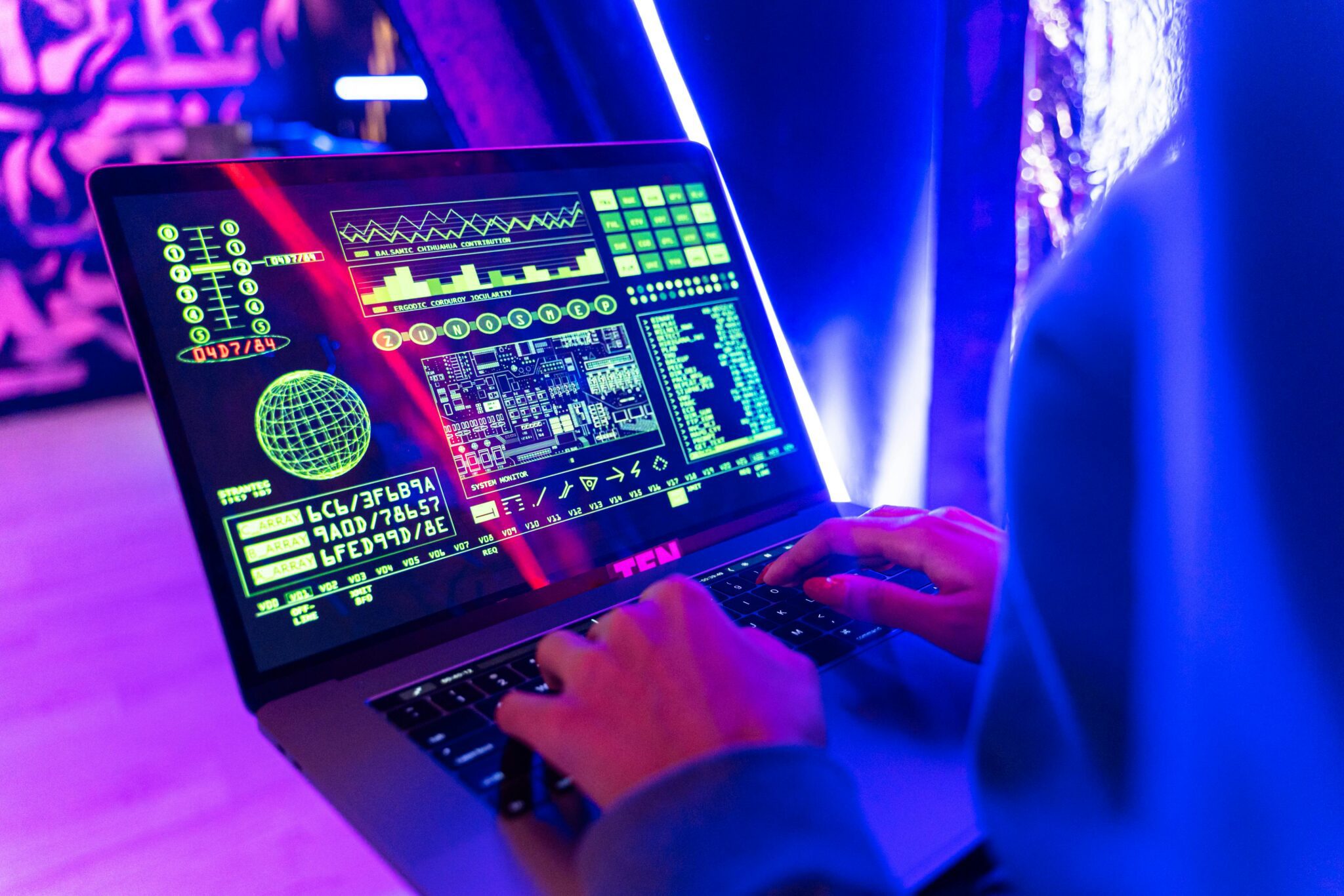
How AI Is Being Used in Cybersecurity
It’s become an arms race, with no more physical or human involvement. It’s now all about AI. Attackers and defenders are now competing in a arms race. As robots are pitted against robots, it’s for us as humans to stay at the top and defend the line against digital threats!
Online Casinos Are Quietly Ahead
AI security is quietly growing in online gambling, a space often overlooked. These platforms face constant challenges, including large volumes of real-time transactions, strict regulatory oversight, and constant fraud attempts. There is no room for error, and AI plays a major role here. Casinos use AI for identifying suspicious activity, spotting multi-accounting, and protecting user data. It’s not just about detecting cheaters; it’s about ensuring fairness and maintaining trust in a space where user stakes are both financial and reputational.
An online casino typically operates on a much larger scale compared to a physical one, often reaching users across the globe and spanning multiple states. As such, AI is helpful in deciding whether to allow a certain gaming session from an IP address. In addition, AI can tailor the games offered to each player, depending on their location.
The key point is that a person’s background should be verified, and AI can determine if someone is genuinely from the area they claim. AI can take into account factors like location, behavior, access time, and even recent support tickets to assess whether a threat is real or harmless. However, such nuance is difficult to handle with rigid rules alone.
Smarter Threat Detection
Traditional security measures relied on known attack patterns and rule-based detection. That worked for a long time, but the threat landscape is shifting. Malware hides within encrypted traffic, phishing at tempts slip through filters, and insider threats can be just as serious as those from outsiders. However, AI is also becoming a game-changer in this area. AI excels at pattern recognition, as it can analyze enormous amounts of data quickly, thus identifying deviations and anomalies.
AI can also spot behavior patterns, differentiate between real threats and false positives, and detect when something feels “off” or is forming in the background.
Activities that once seemed sudden can now be predicted. Security can be improved with better monitoring, and tests can be better designed. There’s still some margin of vulnerability, and no system is completely unbeatable. But the scale and speed of AI-driven analysis are no longer a luxury.
Faster, Adaptive Response
Once an alert happens, time is really important. In the past, you’d get an alert, check it yourself, tell the IT team, and then maybe stop the threat. But by then, the attackers had already finished their work.
Today, AI takes care of a lot of that automatically.
It can stop a bad process, block a bad account, or put a device in quarantine, all in real time. I’ve watched it work during practice attacks. You don’t even get a chance to act before the AI has already done the job.
This isn’t about replacing human teams.
It’s about not filling them with useless alerts. People think in different ways—like taxi drivers think differently from AI, and hackers think even more differently. When the system handles the everyday tasks, humans can focus on what machines still can’t do like understanding a person’s intentions or planning long-term strategies.
Anticipating Threats Before They Land
In recent years, there has been a big change in how we protect against threats. Now, we use AI to figure out possible ways attacks could happen before they actually do. It checks your systems, finds the weak areas, and runs tests using new information about possible dangers.
This helps businesses fix problems before bad guys can use them.
But it’s not perfect. The predictions some times aren’t very clear. Still, they give a direction—and in this area, making smart guesses is usually better than waiting until it’s too late to respond.
Identity Protection, Upgraded
Passwords aren’t going away, but they’re not reliable enough. Multi-factor authentication has helped, but it is being bypassed more frequently. AI brings another layer: behavior. It’s not a complete solution. People have off days. But AI can distinguish between a slightly rushed login and an entirely different user. Combined with security tools like AWS and others, AI-based defenders are gaining a better chance to protect accounts. These systems require quality data and proper configuration, but when done well, they significantly reduce account takeovers.
Fail, Learn, Improve
What I value most about AI is its ability to learn. Every attack, whether successful or not, becomes part of its training. Models evolve. What was effective last month may not be effective next week. That kind of adaptability is not something traditional tools were built for. AI provides a means of improving with every challenge we face. A new phishing technique noticed in Europe today might be prevented automatically in the U.S. by the evening. And this learning is not limited to one domain. Sharing threat data across organizations, industries, and even countries helps AI adapt in a broad, global context. A new phishing threat spotted in one region could be addressed by AI systems in another.
Conclusion
AI isn’t replacing cybersecurity teams. But it’s making them sharper, faster, and more capable. It’s giving defenders room to think ahead rather than just play catch-up.